

Mitsubishi Electric and Mitsubishi Heavy Industries offer diverse air conditioning solutions, detailed in comprehensive manuals for optimal performance.
These guides ensure safe installation, operation, and maintenance, covering packaged and multi-split systems like V-Multi and RAC SCM-ZG.
Users benefit from detailed instructions, service codes, and technical schematics for long-lasting, efficient cooling and heating.
Overview of Mitsubishi Electric and Mitsubishi Heavy Industries
Mitsubishi Electric and Mitsubishi Heavy Industries stand as global leaders in the development and manufacturing of air conditioning systems, each bringing a unique legacy to the market. Mitsubishi Electric, renowned for its innovative technologies, focuses on energy efficiency and sophisticated control systems, often detailed within their extensive manuals.
Mitsubishi Heavy Industries, conversely, emphasizes robust engineering and reliable performance, with a strong presence in both residential and commercial applications. Both companies provide detailed installation manuals, service codes, and technical documentation – crucial for professionals and informed users alike.
These manuals, available for systems like V-Multi packaged units and RAC SCM-ZG multi-split systems, highlight a commitment to user support and long-term system viability. The availability of these resources, including power supply information and diagnostic procedures, underscores their dedication to quality and customer satisfaction. Their products are distributed through official dealers, such as ООО Стройдизайн in Moscow, ensuring access to genuine parts and expert service.
Types of Mitsubishi Air Conditioners Available
Mitsubishi offers a comprehensive range of air conditioning solutions, each supported by dedicated manuals for optimal operation. V-Multi packaged air conditioning systems cater to larger spaces, providing centralized climate control, with detailed technical manuals available for installation and maintenance.
Inverter Multi-Split Systems, like the RAC SCM-ZG series, offer flexible zoning and energy savings, documented in specific user guides and service manuals. Beyond these, Mitsubishi provides standard residential air conditioners, each accompanied by installation guides emphasizing safety and correct usage.
The availability of these manuals – often downloadable in English – ensures users can maximize system performance and troubleshoot common issues. These resources detail power supply requirements, diagnostic procedures, and even refrigerant handling, crucial for qualified technicians. Understanding these diverse options, and accessing the corresponding documentation, is key to selecting and maintaining the ideal Mitsubishi system.
Installation Guide
Mitsubishi manuals prioritize safe and correct installation, emphasizing thorough reading before commencing work. Proper preparation, tool selection, and adherence to safety guidelines are crucial.
Preparing for Installation: Tools and Safety
Prior to installation, carefully review the Mitsubishi air conditioner’s installation manual. Safety is paramount; avoid inserting objects into the air outlet. Gather essential tools, including appropriate wrenches, screwdrivers, a flaring tool for refrigerant piping, a vacuum pump, and a manifold gauge set.
Electrical safety requires a qualified technician and adherence to local electrical codes. Ensure the power supply matches the indoor unit’s specifications. Always disconnect power before making any electrical connections. Wear appropriate personal protective equipment (PPE), such as safety glasses and gloves.
Refrigerant handling demands specialized knowledge and EPA certification. Improper handling can lead to environmental damage and personal injury. Never release refrigerant into the atmosphere. Be aware of potential hazards during installation or relocation, and consult a service agent if needed. Proper preparation minimizes risks and ensures a successful installation.
Indoor Unit Installation
Mounting the indoor unit requires a secure, level surface capable of supporting its weight. Consult the installation manual for specific mounting bracket requirements and clearances. Ensure adequate space around the unit for airflow and maintenance access. Carefully connect the refrigerant piping, ensuring tight, leak-proof connections using appropriate flaring and brazing techniques.
Electrical wiring must comply with local codes and the unit’s power supply information. Connect the power supply wires to the designated terminals, verifying correct polarity. Proper grounding is crucial for safety. Insulate all electrical connections thoroughly.
Airflow considerations are vital for optimal performance. Avoid obstructions that could restrict airflow. Perform a leak test on the refrigerant lines and a functional test of the unit after installation, following the procedures outlined in the manual.
Outdoor Unit Installation
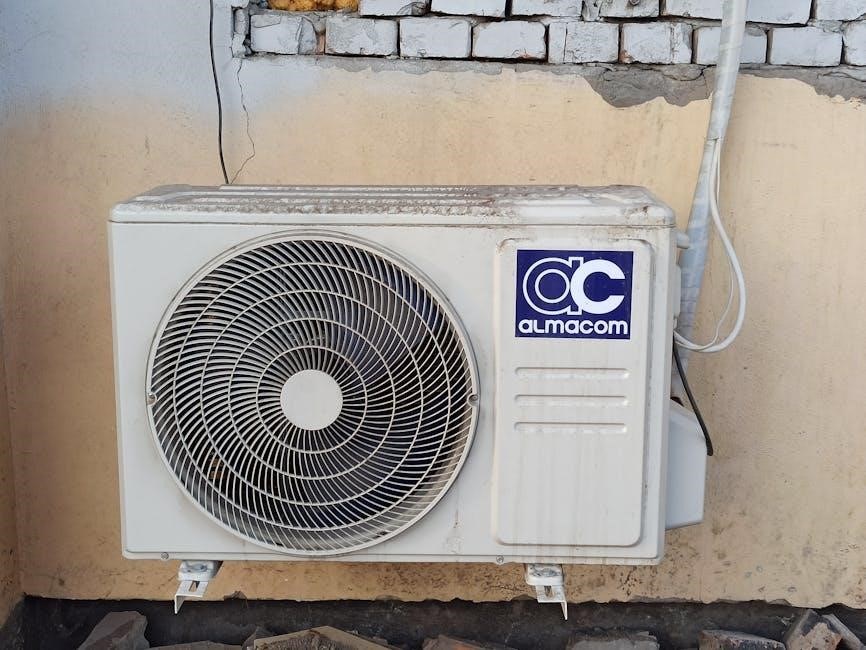
Selecting a location for the outdoor unit is critical; it should be well-ventilated, protected from direct sunlight and extreme weather, and have a solid, level foundation. Ensure sufficient clearance around the unit for maintenance and airflow, as detailed in the installation manual. Securely mount the unit to the foundation, using appropriate vibration isolation measures to minimize noise transmission.
Refrigerant piping connections require careful attention to prevent leaks. Properly route and insulate the refrigerant lines, protecting them from physical damage. Electrical connections must adhere to local codes and the unit’s specifications, ensuring correct wiring and grounding.
Before operation, thoroughly inspect all connections and perform a leak test. The manual emphasizes the importance of qualified personnel for installation and servicing to avoid hazards.
Refrigerant Piping and Electrical Connections
Refrigerant piping demands meticulous attention to detail. The installation manual stresses proper sizing, routing, and insulation of refrigerant lines to maintain system efficiency and prevent leaks. Flaring and brazing techniques must be executed correctly, followed by rigorous leak testing using appropriate methods. Nitrogen purging is crucial during brazing to prevent oxidation inside the lines.
Electrical connections require strict adherence to local electrical codes and the unit’s wiring diagram. Ensure correct voltage, polarity, and grounding. Use appropriately sized wiring and secure all connections tightly. A dedicated circuit breaker is recommended for optimal performance and safety.
The manual cautions against inserting anything into the air outlets and highlights the need for qualified technicians to handle these connections, avoiding potential hazards.

Operation and Usage
Mitsubishi air conditioners offer intuitive remote control functionality, alongside versatile modes like cool, heat, dry, and auto.
Advanced features include timers, adjustable fan speeds, and swing control for personalized comfort.
Understanding the Remote Control

Mitsubishi air conditioner remote controls are designed for user-friendly operation, providing comprehensive control over your indoor climate. The display typically shows the current settings, including temperature, mode, and fan speed. Key buttons include power, mode selection (cool, heat, dry, auto), temperature adjustment (+/-), and fan speed control (auto, low, medium, high).
The timer buttons allow for setting on/off schedules, enhancing energy efficiency and convenience. The ‘swing’ button adjusts the louvers to distribute air flow effectively throughout the room. Some models feature additional buttons for specialized functions like ‘economy’ mode or ‘night’ mode.
Refer to your specific model’s manual for detailed explanations of all remote control functions. Understanding these controls allows you to maximize comfort and optimize energy usage. Proper use ensures the longevity and efficient operation of your Mitsubishi air conditioning system.
Basic Operation Modes: Cool, Heat, Dry, Auto
Mitsubishi air conditioners offer several core operation modes to suit various climate control needs. Cool mode lowers the room temperature by actively removing heat, ideal for warm weather. Heat mode provides warming by extracting heat from the outside air, even in colder temperatures – inverter technology enhances efficiency.
Dry mode reduces humidity without significantly altering the temperature, preventing mold and creating a more comfortable environment. This is useful during damp conditions. Auto mode intelligently selects between cooling and heating based on the set temperature and current room temperature, providing convenient, hands-free operation.
Consult your user manual for specific instructions on selecting and optimizing each mode. Proper mode selection ensures optimal comfort and energy efficiency. Understanding these basic functions is crucial for effective climate control with your Mitsubishi system.
Advanced Features: Timer, Fan Speed, Swing
Mitsubishi air conditioners boast advanced features enhancing user comfort and energy savings. The Timer function allows for pre-set operation schedules, enabling automatic start or stop times, optimizing energy use and ensuring comfort upon arrival or before bedtime. Adjusting Fan Speed provides customized airflow; options typically range from low to high, influencing both comfort and energy consumption.
The Swing function automatically adjusts the louvers, distributing air more evenly throughout the room, eliminating hot or cold spots. Some models offer both vertical and horizontal swing control. These features are easily accessible via the remote control, detailed in your user manual.
Mastering these advanced settings allows for a personalized and efficient cooling or heating experience. Refer to your specific model’s manual for detailed instructions and customization options.
Maintenance and Troubleshooting
Mitsubishi manuals emphasize regular air filter cleaning, coil maintenance, and understanding error codes for optimal performance.
Addressing refrigerant leaks promptly is crucial, often requiring a qualified service technician.
Air Filter Cleaning and Replacement
Mitsubishi air conditioner manuals consistently highlight the importance of routine air filter maintenance for maintaining optimal unit performance and indoor air quality. Filters trap dust, pollen, and other airborne particles, preventing them from circulating throughout your home and impacting the efficiency of the cooling or heating process.
Most Mitsubishi units feature easily accessible filters, typically located behind the front panel of the indoor unit. The frequency of cleaning or replacement depends on usage and environmental conditions; however, a bi-weekly or monthly inspection is generally recommended.
To clean a filter, gently vacuum it to remove loose debris. For more thorough cleaning, wash the filter with mild detergent and water, ensuring it is completely dry before reinstalling. Replacement filters should be of the correct size and type, as specified in your unit’s manual. Ignoring filter maintenance can lead to reduced airflow, increased energy consumption, and potential system malfunctions.
Regular attention to this simple task significantly extends the lifespan of your Mitsubishi air conditioner.
Coil Cleaning Procedures
Mitsubishi air conditioner manuals emphasize the necessity of periodically cleaning both the indoor and outdoor coils to maintain optimal efficiency. Dirty coils restrict airflow and reduce the unit’s ability to effectively transfer heat, leading to increased energy consumption and potential system damage.
Before commencing any coil cleaning, ALWAYS disconnect the power supply to the unit. For the indoor coil, carefully remove the front panel and gently vacuum away any visible dust or debris. A specialized coil cleaner can be applied, following the manufacturer’s instructions, and then rinsed with water – ensuring complete dryness before reassembly.
The outdoor coil requires similar attention. Remove any obstructions, such as leaves or branches, and gently spray the coil with a garden hose, working from the inside out to avoid bending the fins. Avoid using high-pressure washers, as they can cause damage. Professional cleaning is recommended for heavily soiled coils, as outlined in the service manuals.
Consistent coil maintenance ensures peak performance and prolongs the life of your Mitsubishi system.
Common Error Codes and Solutions
Mitsubishi air conditioner manuals detail a range of error codes to assist in diagnosing system malfunctions. These codes, displayed on the indoor unit, provide valuable clues for troubleshooting. For example, code “E1” often indicates an indoor unit temperature sensor issue, requiring professional inspection.
Code “E5” frequently signals a fan motor malfunction, while “E7” points to a potential issue with the outdoor unit’s temperature sensor. A flashing code, like “U0,” may indicate communication problems between the indoor and outdoor units.
Before attempting any repairs, consult the specific error code list in your unit’s manual. Simple solutions, such as resetting the unit by disconnecting power for a few minutes, can sometimes resolve minor errors. However, complex issues, particularly those involving refrigerant or electrical components, require a qualified technician. Ignoring error codes can lead to further damage and void the warranty.
Always prioritize safety and professional assistance when dealing with unfamiliar error messages.
Troubleshooting Refrigerant Leaks
Mitsubishi air conditioner manuals strongly advise against attempting to repair refrigerant leaks yourself. Refrigerant handling requires specialized tools, training, and adherence to environmental regulations. A leak reduces cooling efficiency and can damage the compressor.
Signs of a leak include consistently weak airflow, ice formation on the refrigerant lines, and a hissing sound near the unit. Do not attempt to locate or fix the leak; instead, immediately contact a certified HVAC technician.
The technician will use leak detection equipment to pinpoint the source, repair it, and recharge the system with the correct refrigerant type. Improper handling of refrigerant is illegal and harmful to the environment.
Manuals emphasize the importance of preventative maintenance, including regular coil inspections, to minimize the risk of leaks. Ignoring a refrigerant leak can lead to costly repairs and system failure. Always prioritize professional service for refrigerant-related issues.
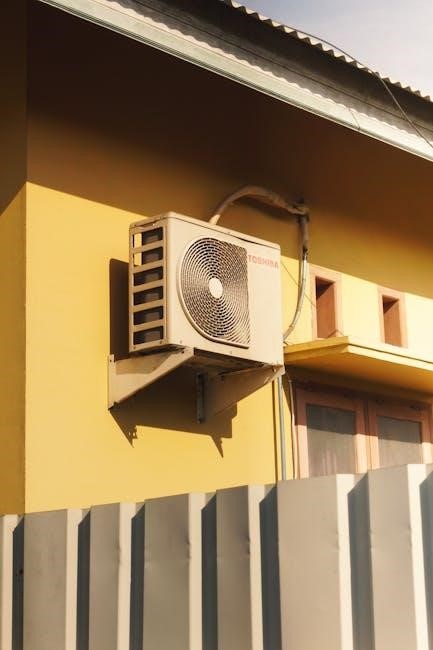
Technical Specifications and Service Codes
Mitsubishi manuals detail crucial power supply information for indoor units, alongside diagnostic service codes.
These resources, including schematics for V-Multi and RAC SCM-ZG, aid qualified technicians in efficient servicing.
Power Supply Information (Indoor Unit)
Mitsubishi air conditioner indoor unit power supply requirements are meticulously detailed within the installation and service manuals. Do not insert anything into the air inlet, as this poses a significant safety hazard. The manuals emphasize the importance of adhering to local electrical codes and regulations during installation.
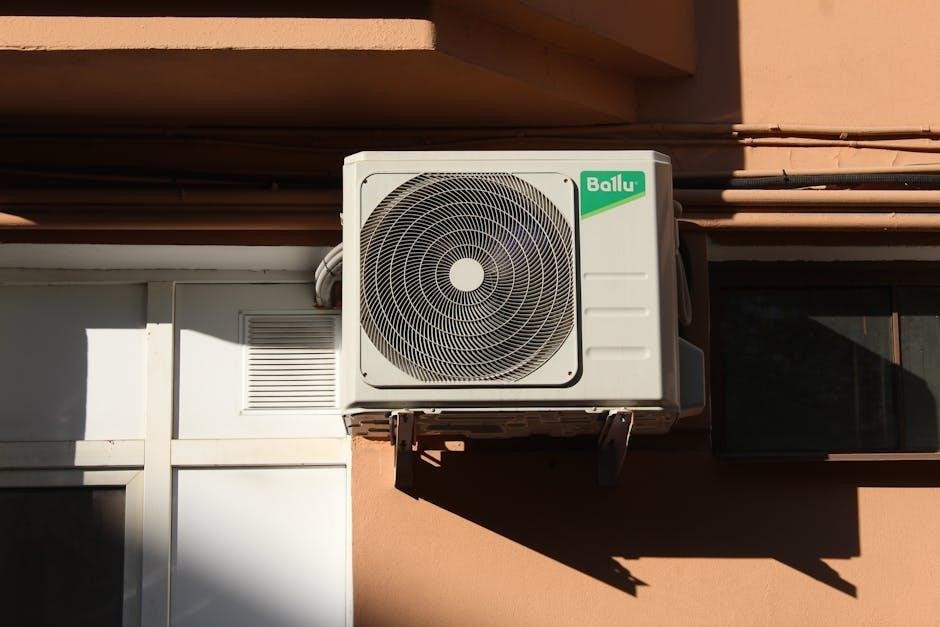
Typically, indoor units operate on single-phase power, with specific voltage and frequency requirements varying by model. Common voltages include 220-240V, and frequencies are generally 50Hz or 60Hz. The manual will clearly state the permissible voltage range for each unit to prevent damage or malfunction.
Furthermore, the documentation outlines the necessary fuse or circuit breaker ratings to protect the electrical circuit. Proper grounding is crucial for safety and operational stability. The manuals provide detailed wiring diagrams illustrating the correct connection of power cables, ensuring correct polarity and secure connections. Always consult the specific manual for your model to confirm the exact power supply specifications and safety precautions.
Service Codes for Diagnostics
Mitsubishi air conditioner service manuals incorporate diagnostic codes to facilitate efficient troubleshooting and repair. These codes, accessed through specific procedures on the remote control or directly on the indoor/outdoor unit’s control board, pinpoint the source of operational issues.
The manuals detail a comprehensive list of error codes, each corresponding to a specific malfunction – from refrigerant leaks and sensor failures to compressor problems and communication errors. Technicians utilize these codes to quickly identify the faulty component, reducing diagnostic time and repair costs.
Accessing service mode often involves a sequence of button presses on the remote or a combination of switch manipulations on the unit itself. The manual provides step-by-step instructions for entering service mode and interpreting the displayed codes. Proper use of these codes requires trained personnel, as incorrect interpretation or attempts to override safety features can lead to further damage or safety hazards.
Technical Manuals and Schematics (V-Multi, RAC SCM-ZG)
Mitsubishi provides detailed technical manuals and schematics crucial for qualified technicians servicing their air conditioning systems. These resources, available for models like the V-Multi packaged systems and the RAC SCM-ZG inverter multi-split series, contain in-depth information beyond standard user guides.
Manuals include comprehensive wiring diagrams, refrigerant flow charts, component layouts, and detailed parts lists. Schematics illustrate the electrical connections and control logic, enabling precise fault diagnosis and repair. The V-Multi manuals specifically cover installation, commissioning, and maintenance of these packaged units, while RAC SCM-ZG documentation focuses on multi-split system configurations.
These documents, often downloadable in PDF format, are essential for understanding the complex operation of Mitsubishi air conditioners. They empower technicians to perform advanced troubleshooting, component replacement, and system optimization, ensuring optimal performance and longevity. Access to these manuals is typically restricted to certified service professionals;
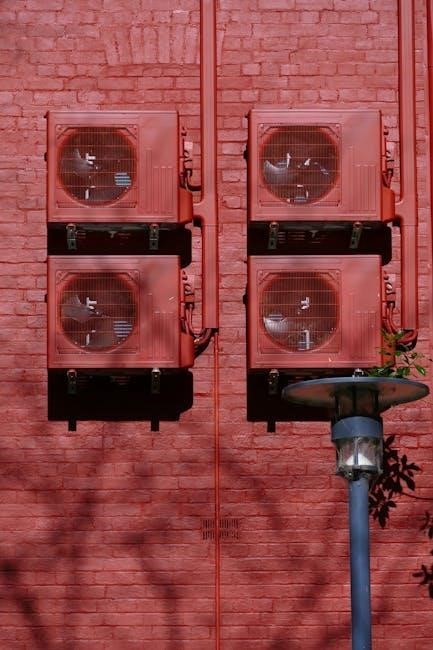
Advanced Systems
Mitsubishi’s V-Multi packaged and inverter multi-split systems require specialized manuals for installation and service, detailing complex configurations and advanced control features.
These guides ensure optimal performance.
V-Multi Packaged Air Conditioning Systems
Mitsubishi Electric’s V-Multi systems represent a sophisticated approach to multi-zone climate control, and their installation and maintenance are comprehensively covered in dedicated technical manuals.
These manuals detail the intricacies of connecting multiple indoor units to a single outdoor unit, optimizing refrigerant flow and ensuring balanced performance across all zones. Installation guides emphasize proper piping techniques, electrical connections, and adherence to safety regulations.
Troubleshooting sections provide detailed error code explanations and diagnostic procedures, assisting technicians in quickly identifying and resolving issues. Schematics illustrate the system’s architecture, facilitating efficient repairs and modifications.
The manuals also cover specific considerations for V-Multi packaged units, including capacity matching, zoning strategies, and control system programming. Downloadable technical manuals, often exceeding 50 pages, are readily available, offering in-depth information for professionals and experienced installers. Proper utilization of these resources is crucial for maximizing the longevity and efficiency of V-Multi systems.
Inverter Multi-Split Systems
Mitsubishi Electric and Mitsubishi Heavy Industries’ inverter multi-split systems offer flexible and energy-efficient cooling and heating solutions, supported by detailed manuals.
These manuals provide step-by-step instructions for installing RAC SCM-ZG models, emphasizing correct refrigerant piping, electrical connections, and indoor/outdoor unit integration. They detail the benefits of inverter technology, including variable speed operation and reduced energy consumption.
Troubleshooting guides offer comprehensive error code explanations and diagnostic procedures, aiding technicians in resolving system malfunctions. Schematics illustrate the complex wiring and refrigerant circuits, facilitating efficient repairs and maintenance.
The manuals also cover advanced features like individual zone control, timer settings, and fan speed adjustments. Safety precautions are prominently featured, ensuring installers and users prioritize safe operation. Access to downloadable technical manuals, often exceeding 50 pages, is readily available, providing in-depth knowledge for optimal system performance and longevity.